Some things are glaringly different in Finland. For example, at any time of the day you can see young children walking unattended in town. You don't automatically think of truancy here as you would in the States. Different schools have different schedules for different classes. I was in the Turku library yesterday at lunch time and the place was hopping with teens and children the age of my daughter.
Children have more freedom and more responsibility in Finland and I think that plays a huge role in the success of the education system. My observation is that the teachers have more freedom and more responsibility as well.
The children don't start school until they are seven and ready to assume the responsibility of their education. I like the philosophy that children of different abilities are taught together. This is also the philosophy of the Concord School District. Finland apparently does a lot to assist the teachers with the challenge of teaching to multiple abilities by including several instructors in a classroom as needed. My daughter even has "back-up French", as she calls it, once a week.
The article below is from the BBC, but you should go their web site HERE to read it so you can see the videos as well.
From the BBC:
Why do Finland's schools get the best results?
Finland's schools score consistently at the top of world rankings, yet the pupils have the fewest number of class hours in the developed world.
By Tom Burridge
BBC World News America, Helsinki
Last year more than 100 foreign delegations and governments visited Helsinki, hoping to learn the secret of their schools' success.
In 2006, Finland's pupils scored the highest average results in science and reading in the whole of the developed world. In the OECD's exams for 15 year-olds, known as PISA, they also came second in maths, beaten only by teenagers in South Korea.
This isn't a one-off: in previous PISA tests Finland also came out top.
The Finnish philosophy with education is that everyone has something to contribute and those who struggle in certain subjects should not be left behind.
A tactic used in virtually every lesson is the provision of an additional teacher who helps those who struggle in a particular subject. But the pupils are all kept in the same classroom, regardless of their ability in that particular subject.
Finland's Education Minister, Henna Virkkunen is proud of her country's record but her next goal is to target the brightest pupils.
''The Finnish system supports very much those pupils who have learning difficulties but we have to pay more attention also to those pupils who are very talented. Now we have started a pilot project about how to support those pupils who are very gifted in certain areas.''
The BBC's Tom Burridge talks to Henna Virkkunen, the Minister of Education and Science in Finland.
Late learners
According to the OECD, Finnish children spend the fewest number of hours in the classroom in the developed world.
This reflects another important theme of Finnish education.
Relaxed atmosphere in Finnish school
Children walk around in their socks at Torpparinmäki Comprehensive
Primary and secondary schooling is combined, so the pupils don't have to change schools at age 13. They avoid a potentially disruptive transition from one school to another.
Teacher Marjaana Arovaara-Heikkinen believes keeping the same pupils in her classroom for several years also makes her job a lot easier.
''I'm like growing up with my children, I see the problems they have when they are small. And now after five years, I still see and know what has happened in their youth, what are the best things they can do. I tell them I'm like their school mother.''
Children in Finland only start main school at age seven. The idea is that before then they learn best when they're playing and by the time they finally get to school they are keen to start learning.
Less is more
Education in the United States
US Education Secretary Arne Duncan
"If education is expensive, try ignorance"
The US education secretary discusses the challenges facing the Obama administration
Finnish parents obviously claim some credit for the impressive school results. There is a culture of reading with the kids at home and families have regular contact with their children's teachers.
Teaching is a prestigious career in Finland. Teachers are highly valued and teaching standards are high.
The educational system's success in Finland seems to be part cultural. Pupils study in a relaxed and informal atmosphere.
Finland also has low levels of immigration. So when pupils start school the majority have Finnish as their native language, eliminating an obstacle that other societies often face.
The system's success is built on the idea of less can be more. There is an emphasis on relaxed schools, free from political prescriptions. This combination, they believe, means that no child is left behind.
Saturday, April 10, 2010

Wednesday, April 7, 2010
Mikael Agricola, Elias Lönnrot and the Finnish Language


 Sometimes I question my decision to study Finnish. My class ends this month and I can do very little in Finnish except to refuse the offer of a plastic shopping bag. My one Finnish sentence is very green! "En tarvitse pussia" I say, piously pulling out my ChicoBag.
Some might question the need to learn Finnish because everyone in Finland speaks English so well. It is true that there are millions of fascinating people in Finland who can speak English better than I.
However, if you don't know Finnish then you can't read Finnish and I fear I am missing a nation's worth of interesting reading material.
For starters I cannot read the Helsingin Sanomat and it looks like the world's most interesting the newspaper, next to the Concord Monitor! It is full of wordy articles and I am even saving some of them for my scrapbook despite the language barrier. Interesting newspapers mean that people are reading. Finland has the highest newspaper readership in the European Union and the third highest in the world, just behind Norway and Japan.
And then there is the Finnish literature that is there just out of my reach. And Finnish literature brings me to my topic: The Flag Day this week is April 9. April 9 is the day that Mikael Agricola, the founder of written Finnish, died. It is also the day Elias Lönnrot was born. Because of those two important personages the day is also known as the Day of the Finnish Language.
Mikael Agricola
One of the interesting things about Finnish is how recently the written language was developed. Before Agricola, Finnish was only a spoken language. Agricola, who became Bishop of Turku, translated the New Testament and the mass into Finnish for printing during the 16th Century. It was a goal of the Reformation that everyone should be able to read the prayers and New Testament for themselves. In order to accomplish this task, Agricola had to develop rules which became the basis for modern Finnish. The enormity of this task reminds me of Sequoyah's twelve year labor to develop the written Cherokee language.
But Finland was not an independent country so for a long period written Finnish did not flourish. Education was conducted solely in Swedish. Written Finnish was used only for religious purposes. Then in the 19th Century written Finnish developed at lightening speed.
Elias Lönnrot
I cannot begin to discuss everything that happened to the Finnish language and Finland in the 19th Century, but certainly a nationalist pride blossomed and this encouraged the discovery and embracing of all things Finnish. Elias Lönnrot was born on April 9, 1802. Lönnrot trained as a doctor and during his medical service in northern and eastern Finland collected and compiled Finnish folk tales that were printed as the Kalevala! The Kalevala is the be all and end all, I tell you!
So, to recap, because I find the blossoming of Finnish so amazing:
1537-Agricola begins to translate the New Testament
300 years of government and education in Swedish.
1809-Finland ceded to Russia
1835-36-Lönnrot publishes the "old" Kalevala
1870 - Alexis Kivi publishes Seven Brothers, the first Finnish novel.
1917-Finnish independence
From 1870 Finnish literature developed at a rapid pace. The Books from Finland blog gives you a taste of how rich the literature is. The latest news in Finnish literature is that Sofi Oksanen's book, Puhdistus ( Purge), was awarded the Nordic Council's literary prize and the English translation will be released next month by Grove Press.
My pictures are from the top:
The cover art for Purge from the Grove Press web site.
The portrait of Elias Lönnrot hanging in the Turku library.
A woodcut portrait of Mikael Agricola found on Wikipedia.
Tuesday, April 6, 2010
Geography of Finland Day!


If I was in charge of the Circus McGurkus today, April 6, would be Geography of Finland Day. The nice thing about having your own blog is that you can declare it to be Geography of Finland Day and it is!
So, in honour of those who have birthdays on April 6, I will talk a bit about the geography of Finland.
The country of Finland is said to look like a woman, the Finnish maiden (Suomi neito), with one arm raised. You can see her on this box of oatmeal. She had two arms before the Winter War and the treaty of Moscow in 1940 when Russia was granted most of Karelia. You can read more about the eastern border of Finland here.
Finland is the land of lakes. Specifically Finland is the land of 187,888 lakes. A lake is defined as a body of water larger than 500 m2. Finland also has 180,000 islands and is home to Europe's largest archipelago. You can see that Finland might be an ideal place to own a remote vacation home and there are, in fact, 475,000 summer homes (kesämökki) and 1.8 million saunas in Finland for a population of 5.3 million people.
Hang onto the vision of a summer house, but remember that Finland is considered the most northerly European country as it is mostly north of the 60 degrees north latitude.
Geography plays a decisive role in the recent politics of Finland because of the proximity of the former Soviet Union and St. Petersburg, formerly Leningrad. During the Cold War Finland had to maintain a careful posture with regard to the Soviet Union. The West Germans termed this posture "Finlandization". I like this sentence from the Encyclopedia Britannica about Finlandization:
The Finnish satirical cartoonist, Kari Suomalainen, defined it as 'the art of bowing to the East so carefully that it could not be considered mooning the West'.
Today Finland's position as a bridge between East and West makes it a unique country to visit.
Happy Birthday Dad!
Sunday, April 4, 2010
Random pictures from Joensuu


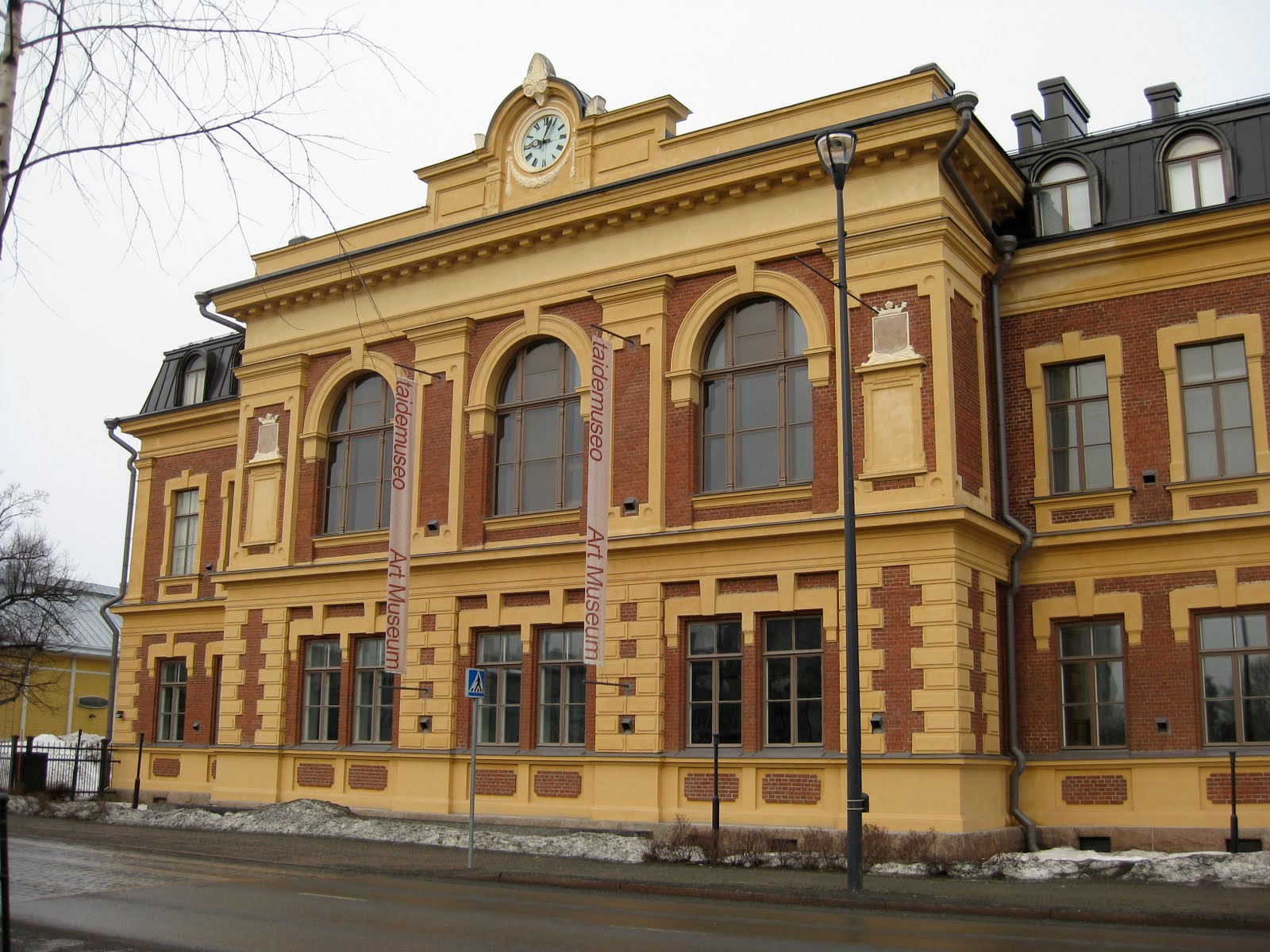
Here are some more photos from Joensuu. The top 2 pictures show the huge empty freezer case in Prisma after the seasonal rush for Mämmi. 5 boxes left!
Next is the Lutheran church with Matti, Chris and Sophia.
I liked the red Lada with the icon calendar hanging inside.
Easter in Finland or the Quest for the Happy Hippo!


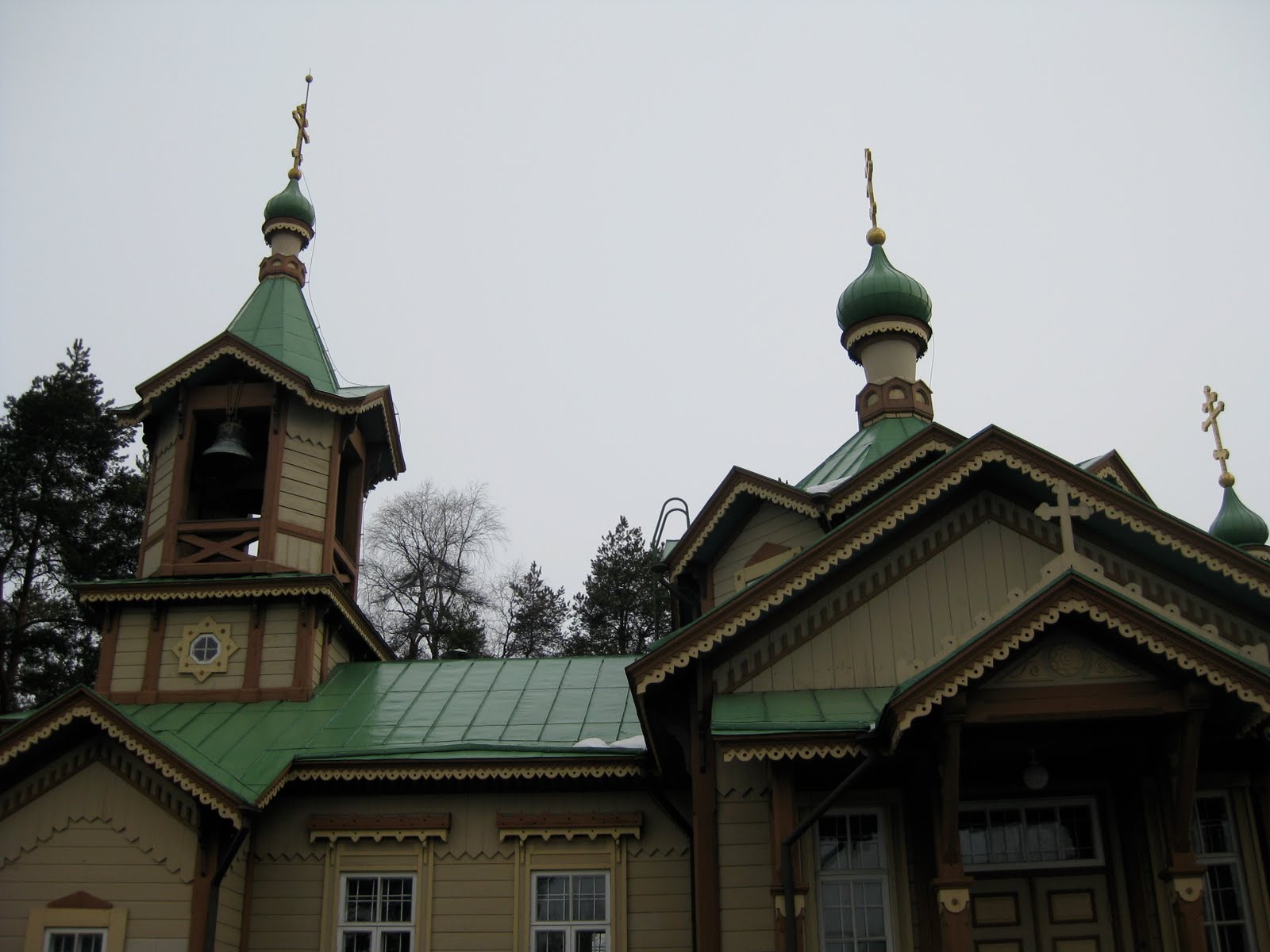
Easter is an important holiday in Finland and less commercial than in the United States, but there are some common ingredients including chocolate eggs (suklaamunat).
We celebrated Easter in eastern Finland with our friends Matti, Tiina, Iida and Tuuli. Matti and Chris are friends from Chris' senior year in high school when Matti was an exchange student at the same school.
On pitkäperjantai, Good Friday or long Friday in Finnish, we caught a 7 AM train to Joensuu. It is a long journey across Finland and we arrived in Joensuu at 2 PM. To prepare for Easter and our visit to our friends, I had gathered some Easter baskets with treats for the children. Easter baskets are not part of Easter in Finland, but there is an egg hunt in the house on Easter morning. In my Easter baskets I had included a Kinderegg and a Fazer egg for each child. I had no idea these eggs would be such a big hit! We learned from Iida that she was hoping to get a Happy Hippo from a Kinderegg so the girls were gleefully cracking Kindereggs looking for Happy Hippos with no luck at first...
All the shops and businesses are closed on pitkäperjantai. My Finnish teacher said that in the past you couldn't even find a restaurant on Good Friday and she and her brother weren't allowed to play outside since running and laughing were discouraged.
After checking into our hotel we went to Matti and Tiina's for dinner and the girls opened their first kindereggs--no Happy Hippo! We also sampled the Fazer eggs. These eggs appeared in the shops just before Easter and will disappear again until next year. They are real egg shells that have been blown out and filled with a chocolate hazelnut filling and the hole in the egg shell has been resealed with sugar. They are amazing.
On Saturday the shops were open again. It's a good thing that shops are open on Saturday since everything shuts again for Sunday and Monday. We went around the craft shops in Joensuu and saw the Orthodox church and then had coffee at Matti and Tiina's with their special guest, Timo. Timo teaches with Matti and is Orthodox. He would be singing that night in the Orthodox church and came over to tell us about the service.
There are two official tax supported religions in Finland, Evangelical Lutheran and Orthodox. Timo told us that after Finnish independence from Russia, the Orthodox Church in Finland became an autonomous archbishopric of the Patriarchate of Constantinople. He explained that the service would begin at 11:30 and there would be 3 services going until 2:30 AM. The church is small so he told us to arrive at about 11 and to buy a candle when we entered. Timo explained that the service would be held in the dark until midnight when the screen would be thrown open to show the brightly lit altar that would echo the light in the open tomb. He also said that people would pass the flame back through the congregation from candle to candle.
At the coffee with Timo we ate pasha, mämmi, karelian rice pastries, and a chocolate cake that I had found in the kauppatori in Turku. I also bought each girl 2 more kindereggs in the hopes of finding a Happy Hippo. No luck on the hippo!
Sophia spent the night with Iida and Tuuli and Chris, Tiina and I met to go to the Orthodox service at 11. Following Timo's advice, we entered the church and purchased our beeswax candles. There are no pews in an Orthodox church, but there were benches around the walls. Where the church widened for the transept, there was an icon in a glass case on a stand. People entering would reverence the icon and then kiss the glass. It was a beautiful depiction of Christ rising from the tomb.
Some of the women wore long skirts and scarves. Tiina surmised that the women in more conservative dress were Russian. Others were in jeans. Some people entered carrying baskets of baked goods. Pasha and dyed red eggs were arrayed at the front of the church. In an Orthodox church the altar is behind a screen that is covered in depictions of the saints. More and more people entered the small church and the service started at 11:30 in the dark with the priest chanting few words, but the choir leader and the choir doing most of the chanting and singing. I could only make out a few words--most importantly "anteeksi" which means forgive me or forgiveness. The priest stood facing the screen with his back to the congregation and towards the end of the service turned around. The doors to the altar were thrown open and I was momentarily blinded by the light at the altar.
People started turning to light the candles of those behind with the flame passed from the altar and a procession formed down the center of the church with first a lantern, then a large cross, then banners and men carrying larger icons with children carrying smaller icons. The choir came after the icons and then the clergy with the priest swinging incense. We followed out and were part of the procession with our candles as we circled the church. People were singing and the crowd seemed to swell as those outside joined as well. We did not enter the church for the next two services, but after the service ended on the porch we headed back to our hotel.
On Sunday morning Matti brought Sophia to our hotel so we could catch our train back to Turku. They had big news! Sophia and Tuuli both found Happy Hippos in the egg hunt. Fortunately Iida was taking this turn of events well.
We are now back in Turku, tired and happy. Tomorrow we will go to an Easter party hosted by a member of our congregation here.
Thursday, April 1, 2010
Fulbright scholar victim of Finnish pranksters!
As Sophia and I lay chuckling on the floor of our tiny balcony today hoping to fool Chris, I thought back to my magnum opus: the finger in the box of 2008. Chris nearly hit the ceiling! Sophia was stunned into shocked silence. She denies she was duped and claims that oreos with toothpaste and salt were the most successful prank of 2008.
Our prank on Chris failed, but someone did fool him! He ran by the river and came home to report that orange balloons were being used to support the failing bridge!
I think I will claim the balloons were mine!
From the YLE English language site:
Collected News Items on April 1
published today 01:55 PM, updated today 07:56 PM
The balloons are the first-known application of "aeroculture" to fix architectural failings.
The balloons are the first-known application of "aeroculture" to fix architectural failings.
Image: YLE / Petra Ristola
The Myllysilta Bridge in Turku, which has sagged and cracked under winter conditions, will be repaired using ordinary balloons, according to the website of the Turku 2011 foundation. It was also reported on April Fool's Day that David Beckham will transfer to a local football team in Pori. If you believe that, keep reading for other remarkable news that broke on April Fools' Day.
The Turku 2011 Foundation's English-language website declares that "the entire bridge will be hoisted to its original position by utilising aeroculture." The site is dedicated to promoting Turku as one of next year's cultural capitals. And indeed April First found Turku's historic bridge bedecked with orange balloons.
The Turku 2011 Foundation says its application of "aeroculture" is the first in the world, and adds that the technology is raising interest elsewhere in Europe.
"The farthermost enquiry comes from the City of Pisa in Italy, where the method is considered to be used for setting the Leaning Tower of Pisa straight," says the Foundation.
The Turku-based daily Turun Sanomat also mentions the balloon suspension of the sagging bridge
Kansan Uutiset, throwing fuel over the traditional Helsinki-Turku rivalry, gleefully reports that the Pitkäsilta bridge in Helsinki is also collapsing. The blame is mysteriously attributed to scientific experiments by the world's largest supercolliding superconductor.
David Beckham Transfers to Local Finnish Team
The front page of the newspaper Satakunnan Kansa declares that football star David Beckham, in a fit of gratitude for his recent surgery in Finland, is planning to transfer to Pori's local football team.
Meanwhile the business and technology publication Tekniikka & Talous reports that the Malmi airport in the capital city region will soon be opening up for space tourism -- as soon as anybody's interested in setting up a space tourism business there.
Apparently Chinese tourists are eager to blast off into space from Malmi.
But it’s not all good news on April Fools’ Day. The Tampere newspaper Aamulehti is reportedly facing difficulties on April First. Contracts regarding the usage of text fonts have ended, and so the paper was forced to write its online version in good old paper and pencil.
Disclaimer
We assure our readers that the only deliberate seasonal deceptions on this page are the ones mentioned in this article. We only mention this in case some readers might have suspicions about self-snuffing cigarettes and the cross-dressing crossbow-wielding bank robber.
The Fool of April
Our prank on Chris failed, but someone did fool him! He ran by the river and came home to report that orange balloons were being used to support the failing bridge!
I think I will claim the balloons were mine!
From the YLE English language site:
Collected News Items on April 1
published today 01:55 PM, updated today 07:56 PM
The balloons are the first-known application of "aeroculture" to fix architectural failings.
The balloons are the first-known application of "aeroculture" to fix architectural failings.
Image: YLE / Petra Ristola
The Myllysilta Bridge in Turku, which has sagged and cracked under winter conditions, will be repaired using ordinary balloons, according to the website of the Turku 2011 foundation. It was also reported on April Fool's Day that David Beckham will transfer to a local football team in Pori. If you believe that, keep reading for other remarkable news that broke on April Fools' Day.
The Turku 2011 Foundation's English-language website declares that "the entire bridge will be hoisted to its original position by utilising aeroculture." The site is dedicated to promoting Turku as one of next year's cultural capitals. And indeed April First found Turku's historic bridge bedecked with orange balloons.
The Turku 2011 Foundation says its application of "aeroculture" is the first in the world, and adds that the technology is raising interest elsewhere in Europe.
"The farthermost enquiry comes from the City of Pisa in Italy, where the method is considered to be used for setting the Leaning Tower of Pisa straight," says the Foundation.
The Turku-based daily Turun Sanomat also mentions the balloon suspension of the sagging bridge
Kansan Uutiset, throwing fuel over the traditional Helsinki-Turku rivalry, gleefully reports that the Pitkäsilta bridge in Helsinki is also collapsing. The blame is mysteriously attributed to scientific experiments by the world's largest supercolliding superconductor.
David Beckham Transfers to Local Finnish Team
The front page of the newspaper Satakunnan Kansa declares that football star David Beckham, in a fit of gratitude for his recent surgery in Finland, is planning to transfer to Pori's local football team.
Meanwhile the business and technology publication Tekniikka & Talous reports that the Malmi airport in the capital city region will soon be opening up for space tourism -- as soon as anybody's interested in setting up a space tourism business there.
Apparently Chinese tourists are eager to blast off into space from Malmi.
But it’s not all good news on April Fools’ Day. The Tampere newspaper Aamulehti is reportedly facing difficulties on April First. Contracts regarding the usage of text fonts have ended, and so the paper was forced to write its online version in good old paper and pencil.
Disclaimer
We assure our readers that the only deliberate seasonal deceptions on this page are the ones mentioned in this article. We only mention this in case some readers might have suspicions about self-snuffing cigarettes and the cross-dressing crossbow-wielding bank robber.
The Fool of April
Mämmi v. Pasha


A morning television show did a survey of what was preferred in Finland: mämmi or pasha? Surprisingly for me, the mämmi won. I have been told by many people that they don't like mämmi.
Mämmi, the top picture, is an ancient concoction of rye, molasses and orange peel. You can read about it on Wikipedia here but I highlight this sentence from Wikipedia in case you don't want to follow the link:
Originally mämmi was eaten during lent. Its laxative properties were associated with purification and purging.
I have a birch bark looking box of mämmi sitting in the freezer!
Pasha (the lower picture) is a soft sweet cheese you make at home from rahka or quark and cream and fruit. It is part of the Orthodox tradition, but is now popular throughout Finland. People make pasha in special molds. If you don't have a mold you can use a flower pot or a coffee filter.
Here are some recipes for the adventurous cook looking to serve something a little different after church on Sunday:
Mämmi (from this web site)
1 lb. malt
3 lbs. rye flour
molasses to taste
1-2 tsp. salt
4 Tbsp. chopped orange rind
Mix the malt and flour. In a large cooking pan (with a heavy bottom if available), heat about 2 quarts of the water and add enough of the flour/malt mix to form a thin mixture (like velli). Sprinkle with a layer of malt and flour. Cover the pan and place in a warm place to sweeten, about one hour. Now mix the sprinkled flour and malt into the mixture. Add more hot water and again a layer of flour and malt. Leave to sweeten. Repeat as often as needed to include all remaining water, flour and malt. With the last addition, season the mämmi to taste with molasses and orange rind. Cook for about 10 mins., stirring constantly. Whip till cooled. Place in low pans (ah, to have those birch bark mämmituokkoset available). Do not fill too full, because mämmi will rise in the oven. Bake in moderate oven for about 1-2 hours. Temperatures that are too low during cooking and baking tend to make the mämmi bitter. Baked mämmi will be cooled quickly and served with cold cream and sugar.
Pasha (from this web site)
3 dl quark (rahka)
200 gr butter (unsalted)
2 dl sugar
2 egg yolks
2 dl cream
1 tsp vanilla sugar
2 tsp grated lemon peel
3 tsp ground almonds
3 tsp chopped raisins
1 packet of mixed peel (leave a few for the decoration)Beat together the sugar and soft butter until light. Whip the cream until it stiffens. Add the quark, egg yolks, vanilla sugar, lemon peel, almonds, raisins, mixed peel and whipped cream to the sugar-butter mixture.
Pour the mixture into a strainer, which is lined with damp gauze. Allow it to strain for an hour or two. Press the mass (still inside the gauze!) tightly into a pasha mould. If you don't have one (pasha mould), you can use a coffee filter. Let the pasha set in the fridge overnight.
Before serving, turn out the pasha, and decorate it with almonds, raisins and mixed peels.
Let me know how you vote: Pasha or Mämmi!
Subscribe to:
Posts (Atom)
