Saturday, April 17, 2010

Time to spare go by air!


We are in Stockholm. Geologic events in Iceland did not hamper our travel on the Viking Ferry nor did it dampen our hunger for the Viking Buffet, the smorgasbord to beat all smorgasbords! We arrived last night after an all day journey through beautiful islands...both the Turku archipelago and the Åland Islands. We saw quaint, isolated cottages that would be perfect for Moomin Poppa (or Pippi). As we drew near to Stockholm the houses became more magnificent.

An all day boat trip is like forced relaxation. We relaxed in every conceivable spot...our tiny cabin, the disco lounge, the cafe and the windy deck. I especially enjoyed watching the nimble dancers twirling their partners on the dance floor under the mirror globes while outside a lone seagull followed in our wake and the swans flew close to the nearby shore.

For the full experience, watch this short clip:

Wednesday, April 14, 2010

Helsinki and Suomenlinna


On Tuesday I went to Helsinki to meet a friend visiting from NH. Helsinki is a wonderful city to explore. There is so much to see and it is easy to navigate. And any city with street cars is bound to be fun. You are above ground, but not on a strange bus that could go anywhere. You are following tracks.

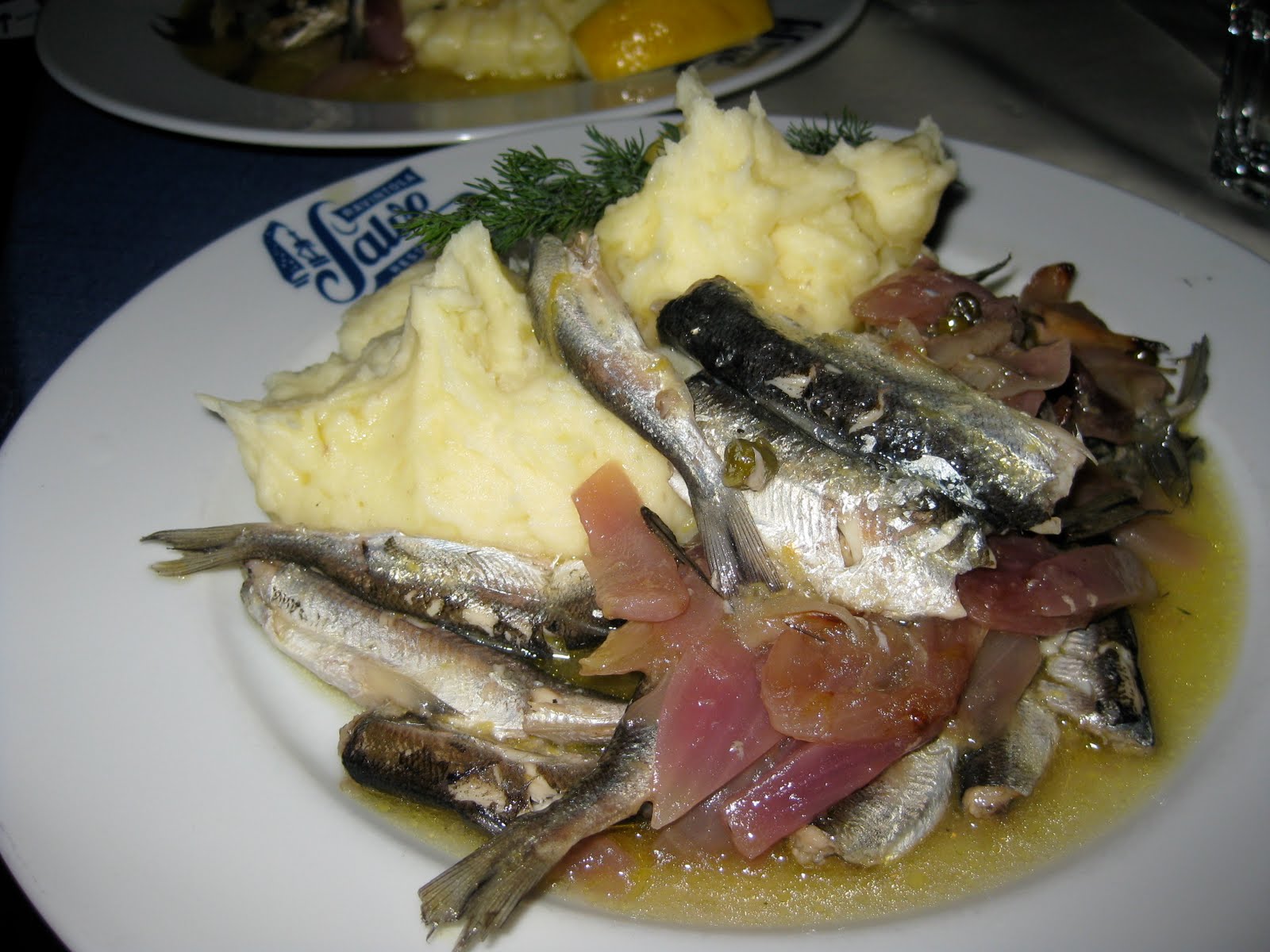
Felice and I barely scratched the surface of things to do in Helsinki. Our first big tourist site, after our lunch of small, whole fish, was Suomenlinna.

Suomenlinna is one of the 5 UNESCO World Heritage sites in Finland. It is an island just off the kauppatori (market square) in Helsinki. (Tourist tip: If you buy a day pass for public transportation at any R-Kioski, little convenience stores that are everywhere, it includes the ferry to Suomenlinna).

Suomenlinna was the military marvel of its time, the 18 Century. It was known as the Gibraltar of the North. Construction began in 1748 with the energy and enthusiasm of an industrious Swede named Augustin Ehrensvärd. The original Swedish name was Sveaborg and the fortress was designed principally to defend against the Russian threat. When Ehrensvärd died (you can see his tomb with the fanciful sculpture above) much of the steam went out of the project. Sweden lost Sveaborg to Russia in 1808 and it became a Russian post for a century.

In 1855 British and French troops bombarded it during the Crimean War and it sustained heavy damage. With Finnish independence in 1917, the islands and battlements became known as Suomenlinna, Finland's fortress. It has a sad history too, as a prison camp after the Finnish Civil War where 200 people were executed.

It is interesting to learn about the Swedish and Russian history. We don't think of Sweden as a military power, but the 18th Century was full of land grabs and wars between nations as kings and tsars and emperors sought to expand. The founding of St. Petersburg in 1703 by Tsar Peter the 1st was certainly a cause for the importance of Sveaborg. As Felice pointed out, it was the economic hardship for the American colonists caused by the expense of these European wars that lead, in part, to our Revolution. I bet Count Rumford could have explained the various European alliances.

Felice and I had a late start over to Suomenlinna, but we were able to view the explanatory movie in the museum. We then walked around the islands avoiding the patches of snow. On our way back to the ferry we stopped for dinner at the restaurant and brewery Panimo. We give in 4 thumbs up!

Sunday, April 11, 2010

Huhtikuu

Yesterday we went to the Botanical Gardens at Ruissalo. Ruissalo is an island that is close to Turku Castle and the harbor. I would like to explore the island some more, but we were there for a short time. This field was behind the bus stop and reminded me that this is April!

All the months in Finnish include the ending "kuu" because kuu means moon. April is huhtikuu. Huhtikuu comes from the phrase "huhti eli kaski (uusi pelto)" or new field.

You will notice that Sophia is not wearing a hat and there is very little snow--only in the woods. We saw cranes and swans flying overhead as the birds move north from Africa.

Saturday, April 10, 2010

Less is More: Education in Finland

Some things are glaringly different in Finland. For example, at any time of the day you can see young children walking unattended in town. You don't automatically think of truancy here as you would in the States. Different schools have different schedules for different classes. I was in the Turku library yesterday at lunch time and the place was hopping with teens and children the age of my daughter.

Children have more freedom and more responsibility in Finland and I think that plays a huge role in the success of the education system. My observation is that the teachers have more freedom and more responsibility as well.

The children don't start school until they are seven and ready to assume the responsibility of their education. I like the philosophy that children of different abilities are taught together. This is also the philosophy of the Concord School District. Finland apparently does a lot to assist the teachers with the challenge of teaching to multiple abilities by including several instructors in a classroom as needed. My daughter even has "back-up French", as she calls it, once a week.

The article below is from the BBC, but you should go their web site HERE to read it so you can see the videos as well.

From the BBC:

Why do Finland's schools get the best results?


Finland's schools score consistently at the top of world rankings, yet the pupils have the fewest number of class hours in the developed world.
By Tom Burridge
BBC World News America, Helsinki

Last year more than 100 foreign delegations and governments visited Helsinki, hoping to learn the secret of their schools' success.

In 2006, Finland's pupils scored the highest average results in science and reading in the whole of the developed world. In the OECD's exams for 15 year-olds, known as PISA, they also came second in maths, beaten only by teenagers in South Korea.

This isn't a one-off: in previous PISA tests Finland also came out top.

The Finnish philosophy with education is that everyone has something to contribute and those who struggle in certain subjects should not be left behind.

A tactic used in virtually every lesson is the provision of an additional teacher who helps those who struggle in a particular subject. But the pupils are all kept in the same classroom, regardless of their ability in that particular subject.

Finland's Education Minister, Henna Virkkunen is proud of her country's record but her next goal is to target the brightest pupils.

''The Finnish system supports very much those pupils who have learning difficulties but we have to pay more attention also to those pupils who are very talented. Now we have started a pilot project about how to support those pupils who are very gifted in certain areas.''

The BBC's Tom Burridge talks to Henna Virkkunen, the Minister of Education and Science in Finland.

Late learners

According to the OECD, Finnish children spend the fewest number of hours in the classroom in the developed world.

This reflects another important theme of Finnish education.

Relaxed atmosphere in Finnish school
Children walk around in their socks at Torpparinmäki Comprehensive

Primary and secondary schooling is combined, so the pupils don't have to change schools at age 13. They avoid a potentially disruptive transition from one school to another.

Teacher Marjaana Arovaara-Heikkinen believes keeping the same pupils in her classroom for several years also makes her job a lot easier.

''I'm like growing up with my children, I see the problems they have when they are small. And now after five years, I still see and know what has happened in their youth, what are the best things they can do. I tell them I'm like their school mother.''

Children in Finland only start main school at age seven. The idea is that before then they learn best when they're playing and by the time they finally get to school they are keen to start learning.

Less is more


Education in the United States
US Education Secretary Arne Duncan
"If education is expensive, try ignorance"

The US education secretary discusses the challenges facing the Obama administration

Finnish parents obviously claim some credit for the impressive school results. There is a culture of reading with the kids at home and families have regular contact with their children's teachers.

Teaching is a prestigious career in Finland. Teachers are highly valued and teaching standards are high.

The educational system's success in Finland seems to be part cultural. Pupils study in a relaxed and informal atmosphere.

Finland also has low levels of immigration. So when pupils start school the majority have Finnish as their native language, eliminating an obstacle that other societies often face.

The system's success is built on the idea of less can be more. There is an emphasis on relaxed schools, free from political prescriptions. This combination, they believe, means that no child is left behind.

Wednesday, April 7, 2010

Mikael Agricola, Elias Lönnrot and the Finnish Language


Sometimes I question my decision to study Finnish. My class ends this month and I can do very little in Finnish except to refuse the offer of a plastic shopping bag. My one Finnish sentence is very green! "En tarvitse pussia" I say, piously pulling out my ChicoBag.

Some might question the need to learn Finnish because everyone in Finland speaks English so well. It is true that there are millions of fascinating people in Finland who can speak English better than I.

However, if you don't know Finnish then you can't read Finnish and I fear I am missing a nation's worth of interesting reading material.

For starters I cannot read the Helsingin Sanomat and it looks like the world's most interesting the newspaper, next to the Concord Monitor! It is full of wordy articles and I am even saving some of them for my scrapbook despite the language barrier. Interesting newspapers mean that people are reading. Finland has the highest newspaper readership in the European Union and the third highest in the world, just behind Norway and Japan.

And then there is the Finnish literature that is there just out of my reach. And Finnish literature brings me to my topic: The Flag Day this week is April 9. April 9 is the day that Mikael Agricola, the founder of written Finnish, died. It is also the day Elias Lönnrot was born. Because of those two important personages the day is also known as the Day of the Finnish Language.

Mikael Agricola
One of the interesting things about Finnish is how recently the written language was developed. Before Agricola, Finnish was only a spoken language. Agricola, who became Bishop of Turku, translated the New Testament and the mass into Finnish for printing during the 16th Century. It was a goal of the Reformation that everyone should be able to read the prayers and New Testament for themselves. In order to accomplish this task, Agricola had to develop rules which became the basis for modern Finnish. The enormity of this task reminds me of Sequoyah's twelve year labor to develop the written Cherokee language.

But Finland was not an independent country so for a long period written Finnish did not flourish. Education was conducted solely in Swedish. Written Finnish was used only for religious purposes. Then in the 19th Century written Finnish developed at lightening speed.

Elias Lönnrot
I cannot begin to discuss everything that happened to the Finnish language and Finland in the 19th Century, but certainly a nationalist pride blossomed and this encouraged the discovery and embracing of all things Finnish. Elias Lönnrot was born on April 9, 1802. Lönnrot trained as a doctor and during his medical service in northern and eastern Finland collected and compiled Finnish folk tales that were printed as the Kalevala! The Kalevala is the be all and end all, I tell you!

So, to recap, because I find the blossoming of Finnish so amazing:
1537-Agricola begins to translate the New Testament
300 years of government and education in Swedish.
1809-Finland ceded to Russia
1835-36-Lönnrot publishes the "old" Kalevala
1870 - Alexis Kivi publishes Seven Brothers, the first Finnish novel.
1917-Finnish independence

From 1870 Finnish literature developed at a rapid pace. The Books from Finland blog gives you a taste of how rich the literature is. The latest news in Finnish literature is that Sofi Oksanen's book, Puhdistus ( Purge), was awarded the Nordic Council's literary prize and the English translation will be released next month by Grove Press.

My pictures are from the top:
The cover art for Purge from the Grove Press web site.
The portrait of Elias Lönnrot hanging in the Turku library.
A woodcut portrait of Mikael Agricola found on Wikipedia.

Tuesday, April 6, 2010

Geography of Finland Day!


If I was in charge of the Circus McGurkus today, April 6, would be Geography of Finland Day. The nice thing about having your own blog is that you can declare it to be Geography of Finland Day and it is!

So, in honour of those who have birthdays on April 6, I will talk a bit about the geography of Finland.

The country of Finland is said to look like a woman, the Finnish maiden (Suomi neito), with one arm raised. You can see her on this box of oatmeal. She had two arms before the Winter War and the treaty of Moscow in 1940 when Russia was granted most of Karelia. You can read more about the eastern border of Finland here.

Finland is the land of lakes. Specifically Finland is the land of 187,888 lakes. A lake is defined as a body of water larger than 500 m2. Finland also has 180,000 islands and is home to Europe's largest archipelago. You can see that Finland might be an ideal place to own a remote vacation home and there are, in fact, 475,000 summer homes (kesämökki) and 1.8 million saunas in Finland for a population of 5.3 million people.

Hang onto the vision of a summer house, but remember that Finland is considered the most northerly European country as it is mostly north of the 60 degrees north latitude.

Geography plays a decisive role in the recent politics of Finland because of the proximity of the former Soviet Union and St. Petersburg, formerly Leningrad. During the Cold War Finland had to maintain a careful posture with regard to the Soviet Union. The West Germans termed this posture "Finlandization". I like this sentence from the Encyclopedia Britannica about Finlandization:

The Finnish satirical cartoonist, Kari Suomalainen, defined it as 'the art of bowing to the East so carefully that it could not be considered mooning the West'.


Today Finland's position as a bridge between East and West makes it a unique country to visit.

Happy Birthday Dad!

Sunday, April 4, 2010

Random pictures from Joensuu


Here are some more photos from Joensuu. The top 2 pictures show the huge empty freezer case in Prisma after the seasonal rush for Mämmi. 5 boxes left!

Next is the Lutheran church with Matti, Chris and Sophia.

I liked the red Lada with the icon calendar hanging inside.